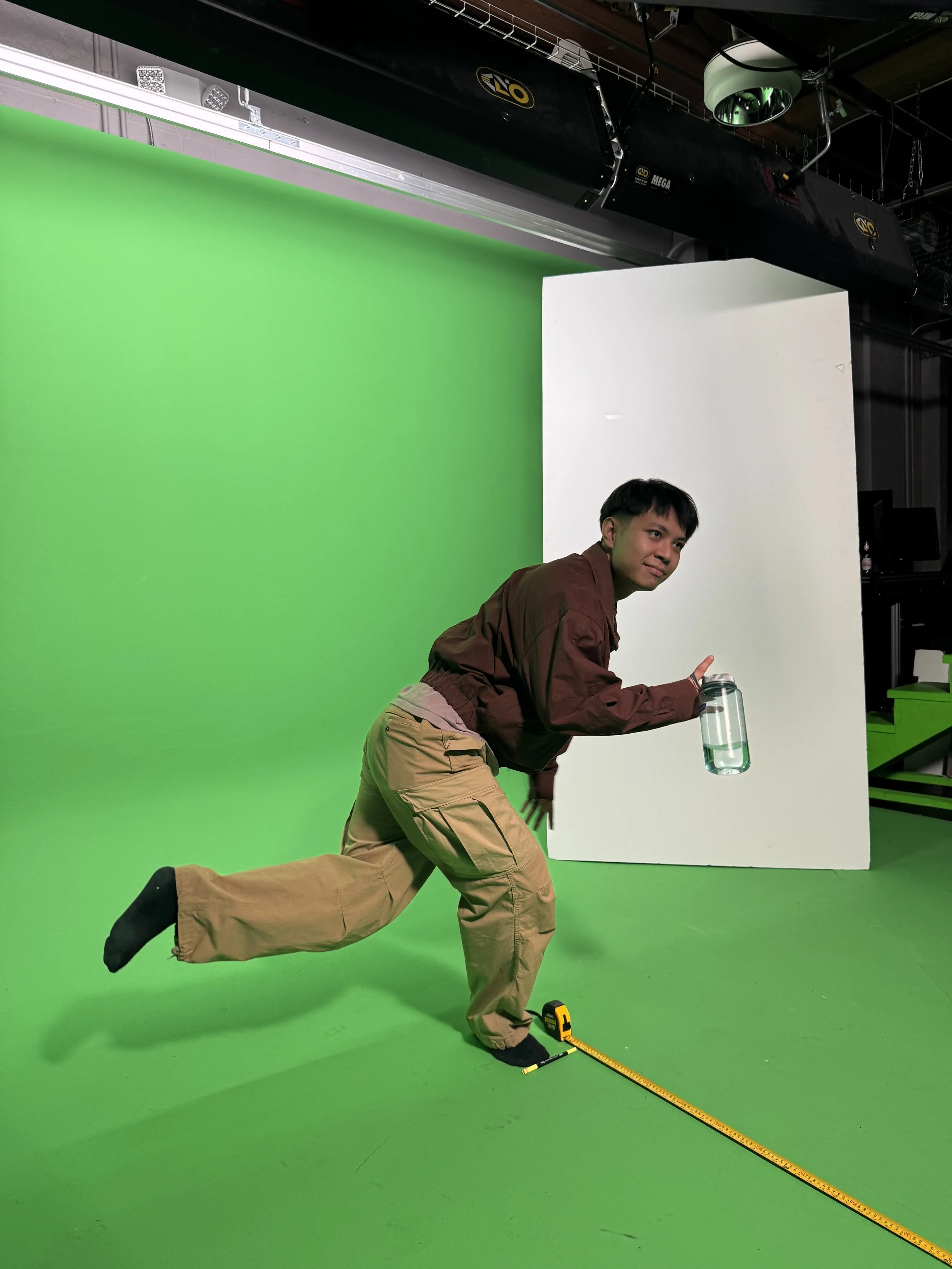
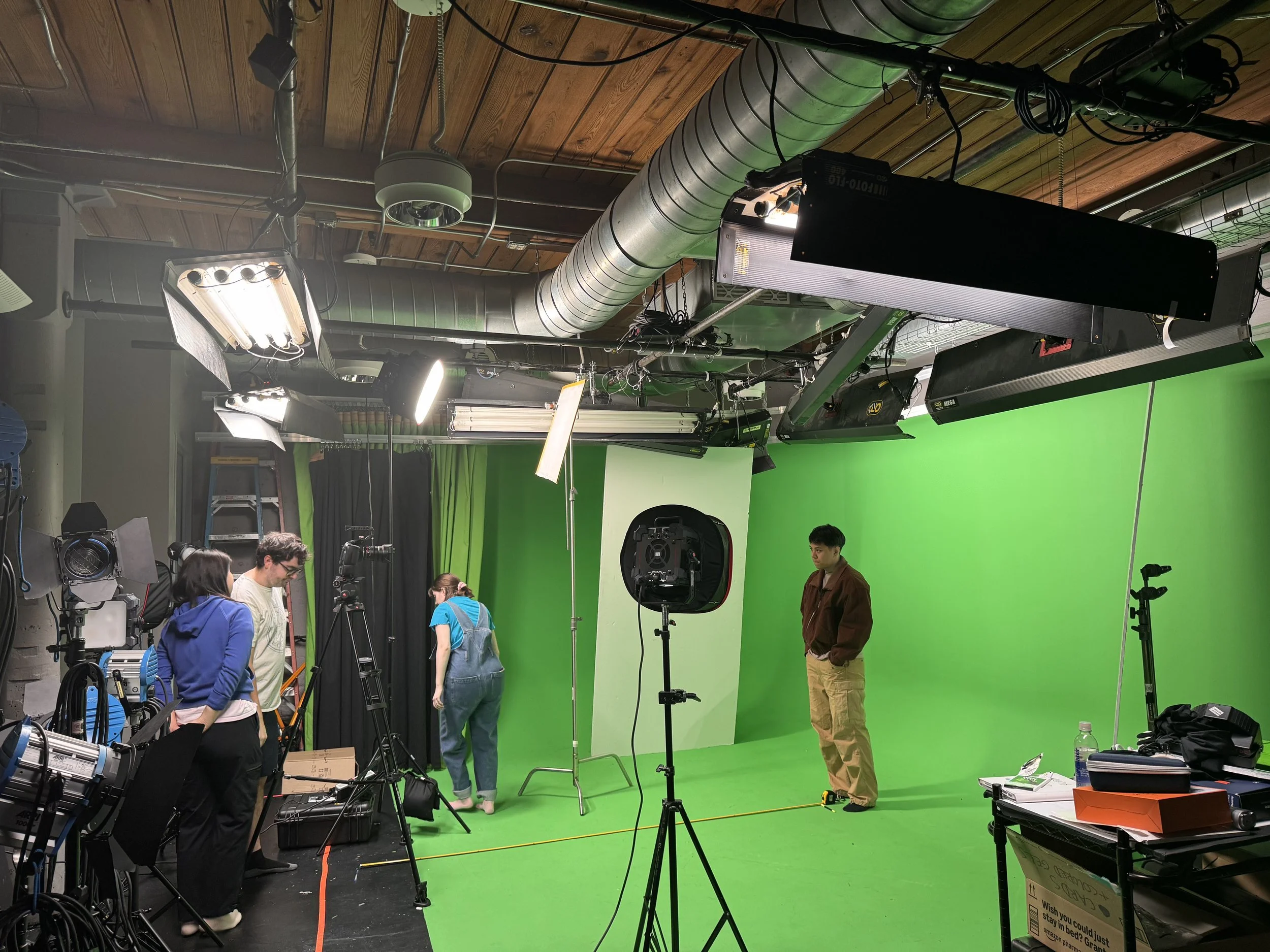
In this cinematography class, I teamed up with my classmates to explore practical effects, camera operation, lighting, green screen, and compositing. Working side by side with filmmakers and VFX artists pushed me to communicate more clearly, plan more intentionally, and ultimately make stronger images. One thing I didn't fully understand at the time, though, was how critical it is to document the process and capture solid behind-the-scenes material. Now that I do, I treat BTS as part of the work — not an afterthought — and I make sure that lesson sticks going forward.
Forced Perspective
The Miniature Illusion
Forced perspective is an optical illusion technique that manipulates human perception to make objects appear larger, smaller, closer, or farther away than they actually are. By carefully aligning objects at different distances along the camera's Z-axis, this method creates compelling, in-camera, real-world scenes without complex digital editing — frequently used in photography, film, and architecture.
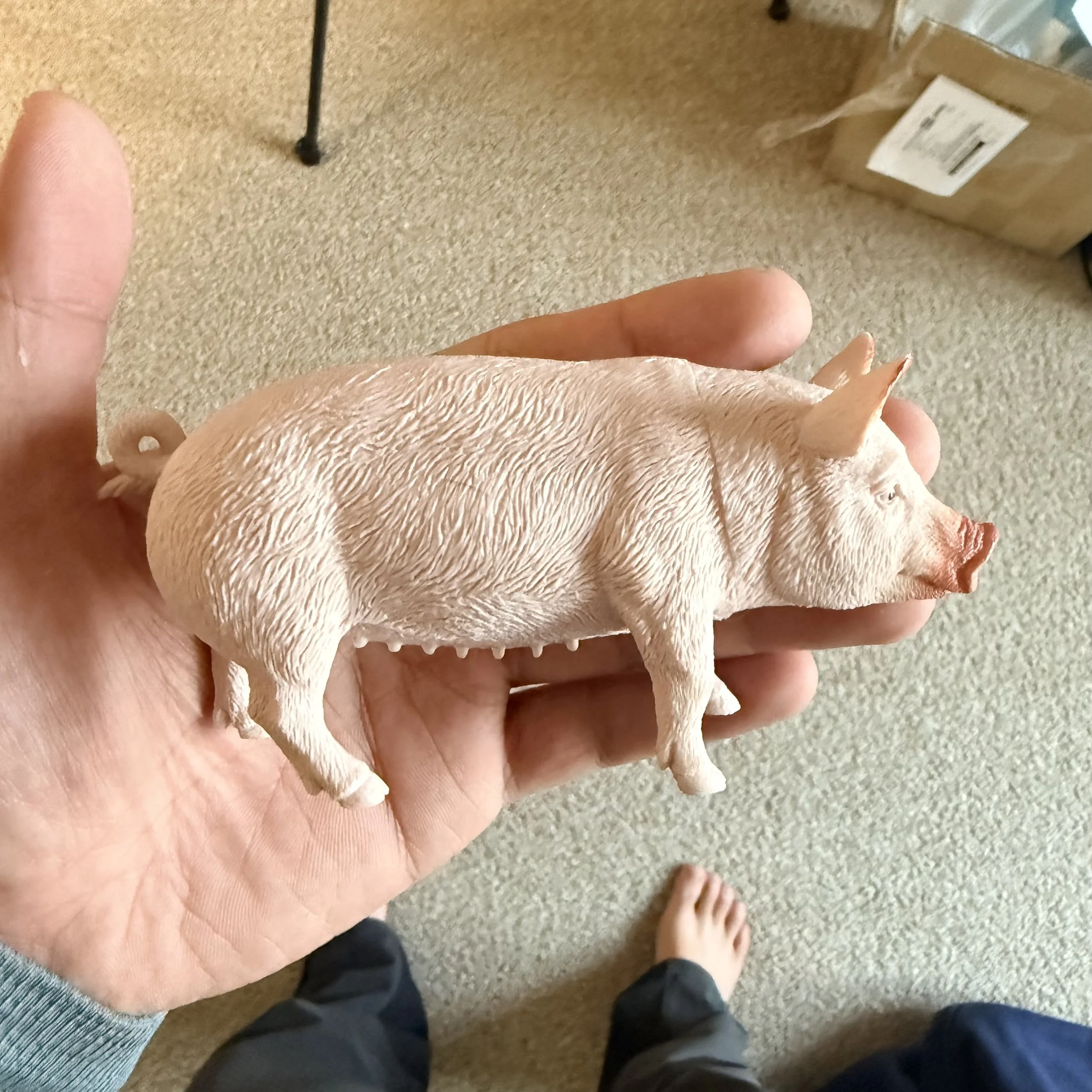
I found this cute pig miniature in a local game shop. I thought it would be fun to use it for the forced perspective assignment.
Twin / Doppelganger
A BTS video of our crew preparing the camera and lighting setup in my apartment, the shooting location. My cat Milo is the on-set supervisor watching over us.
Green Screen / Match Lighting
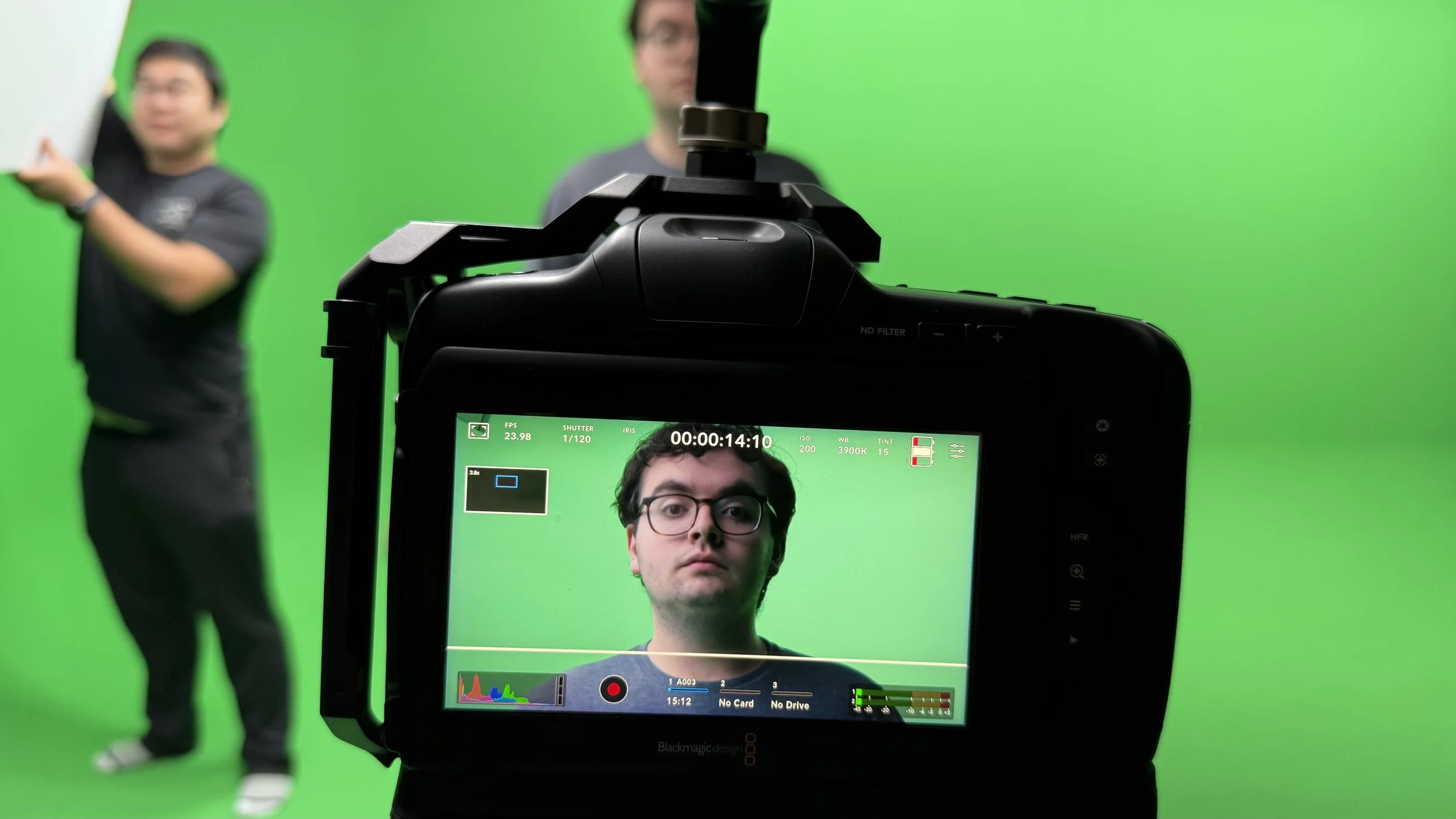
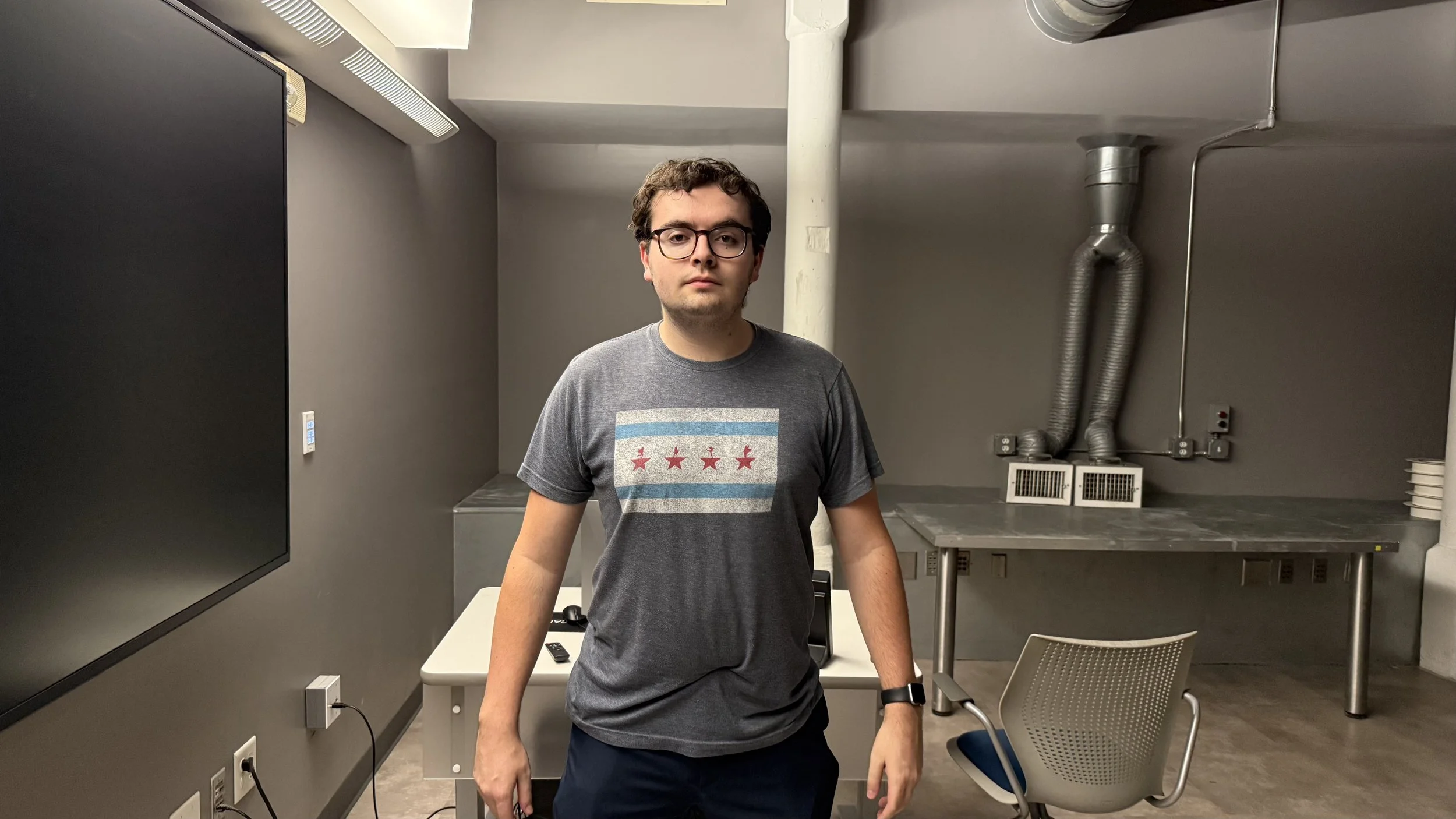
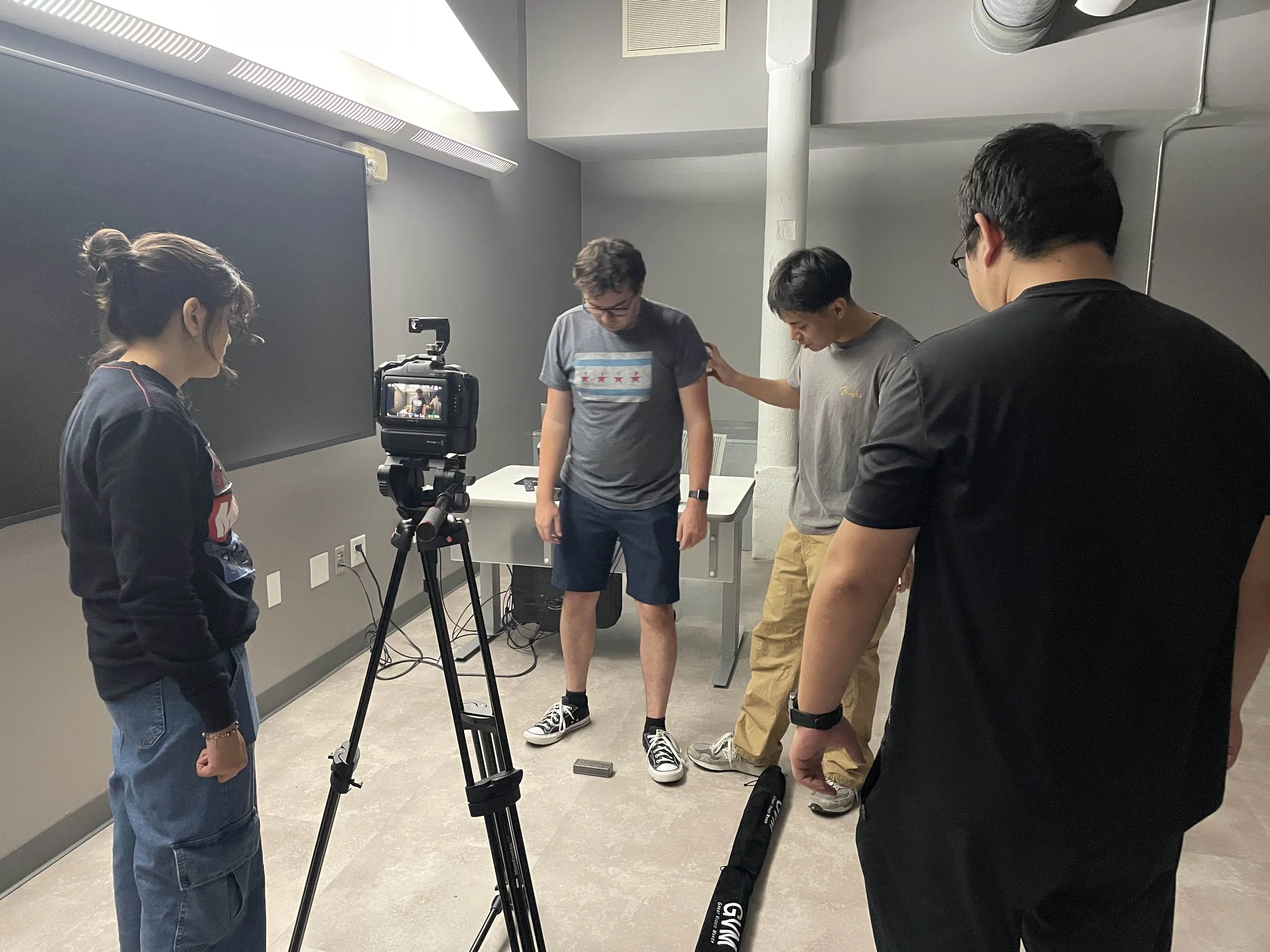
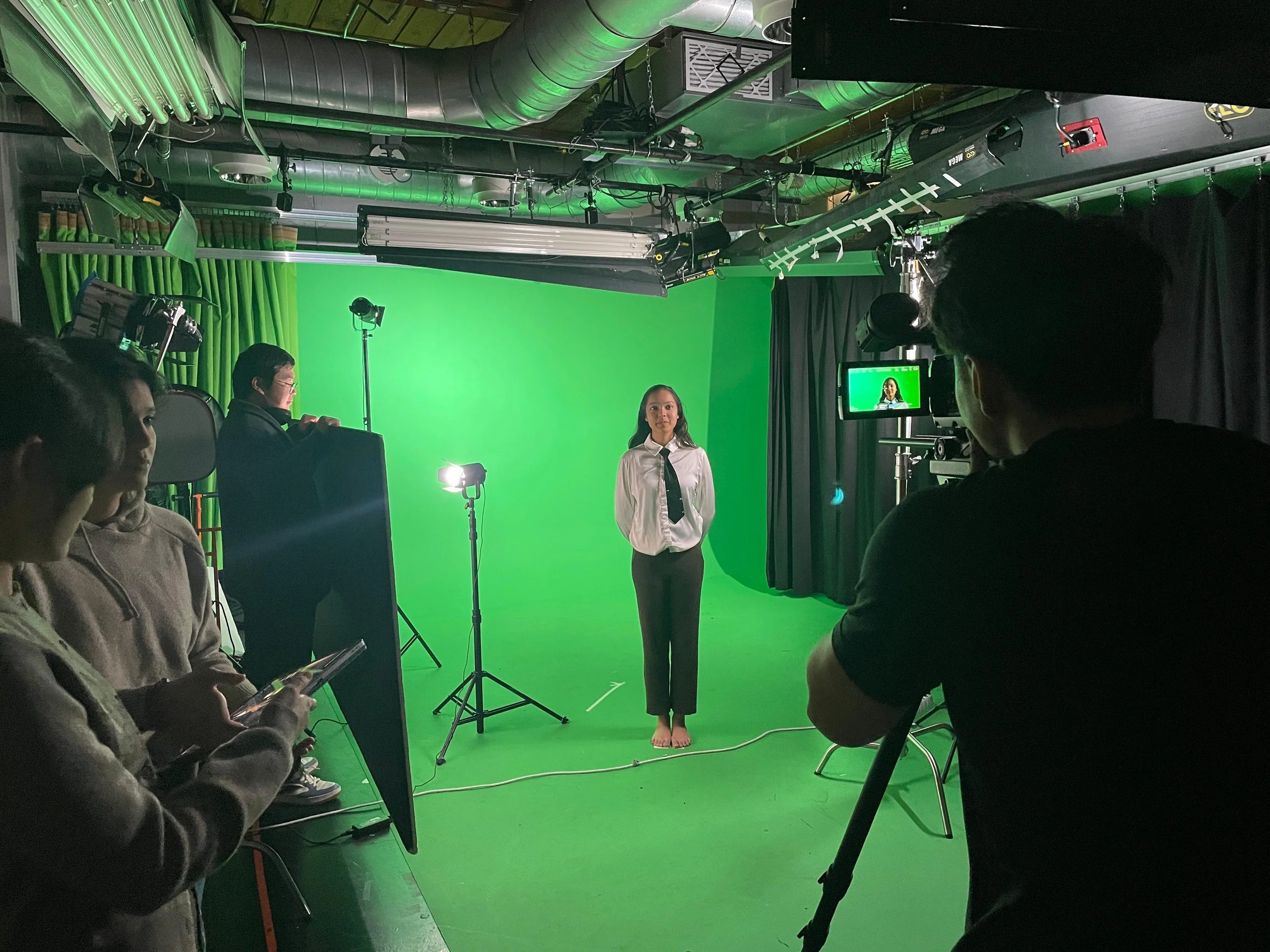
We shot this scene at an empty classroom. In the top left of the shot you can see a long strip lamp that projects straight up to a reflecting surface, creating tons of indirect bounce light in the room. I underestimated the difficulty of replicating this lighting setup. Our green screen stage isn't tall enough to rig a light and reflection board above it the same way, so we had to find other ways to mimic the setup — not perfectly, but close.
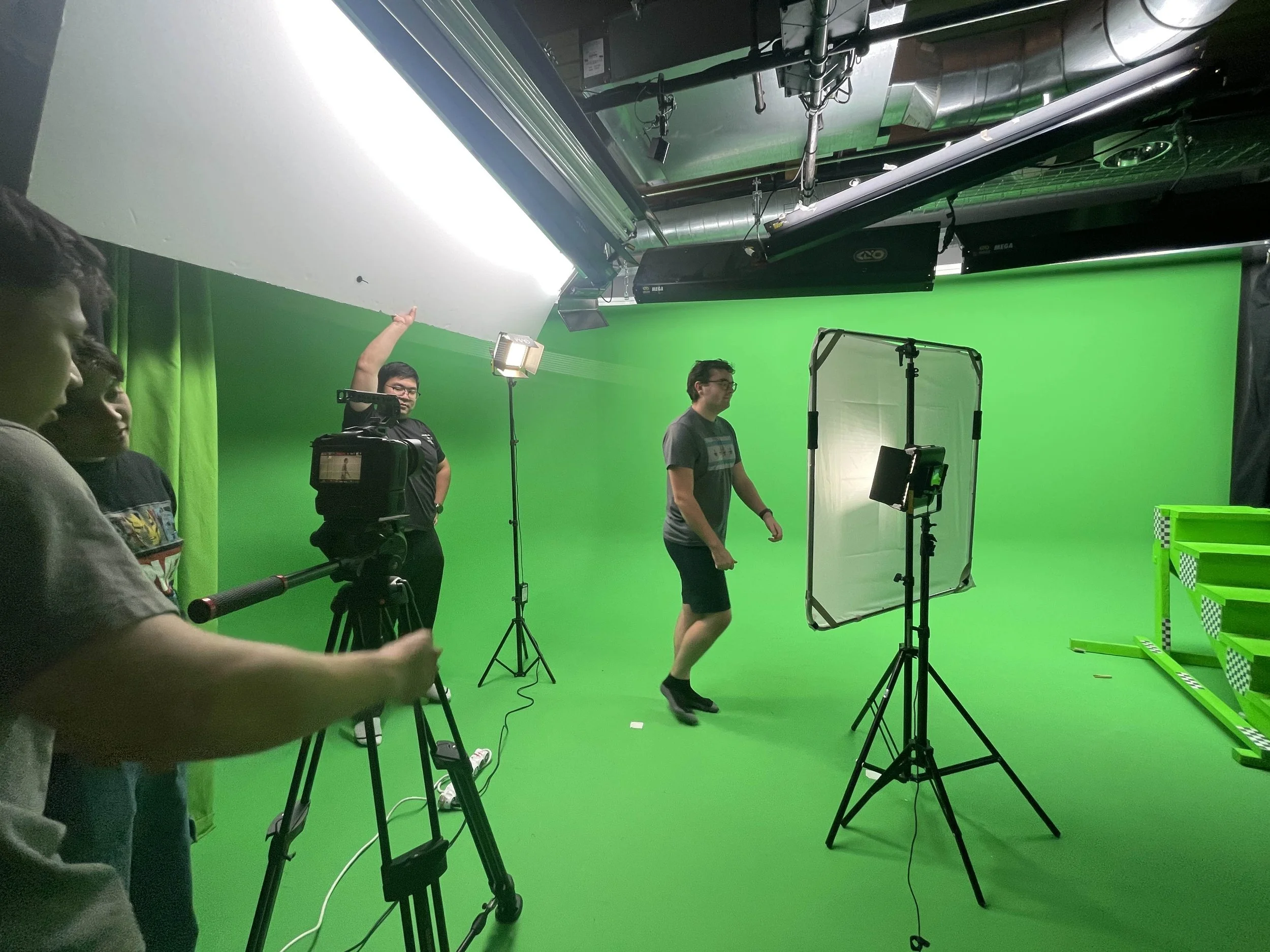
Actor Replacement
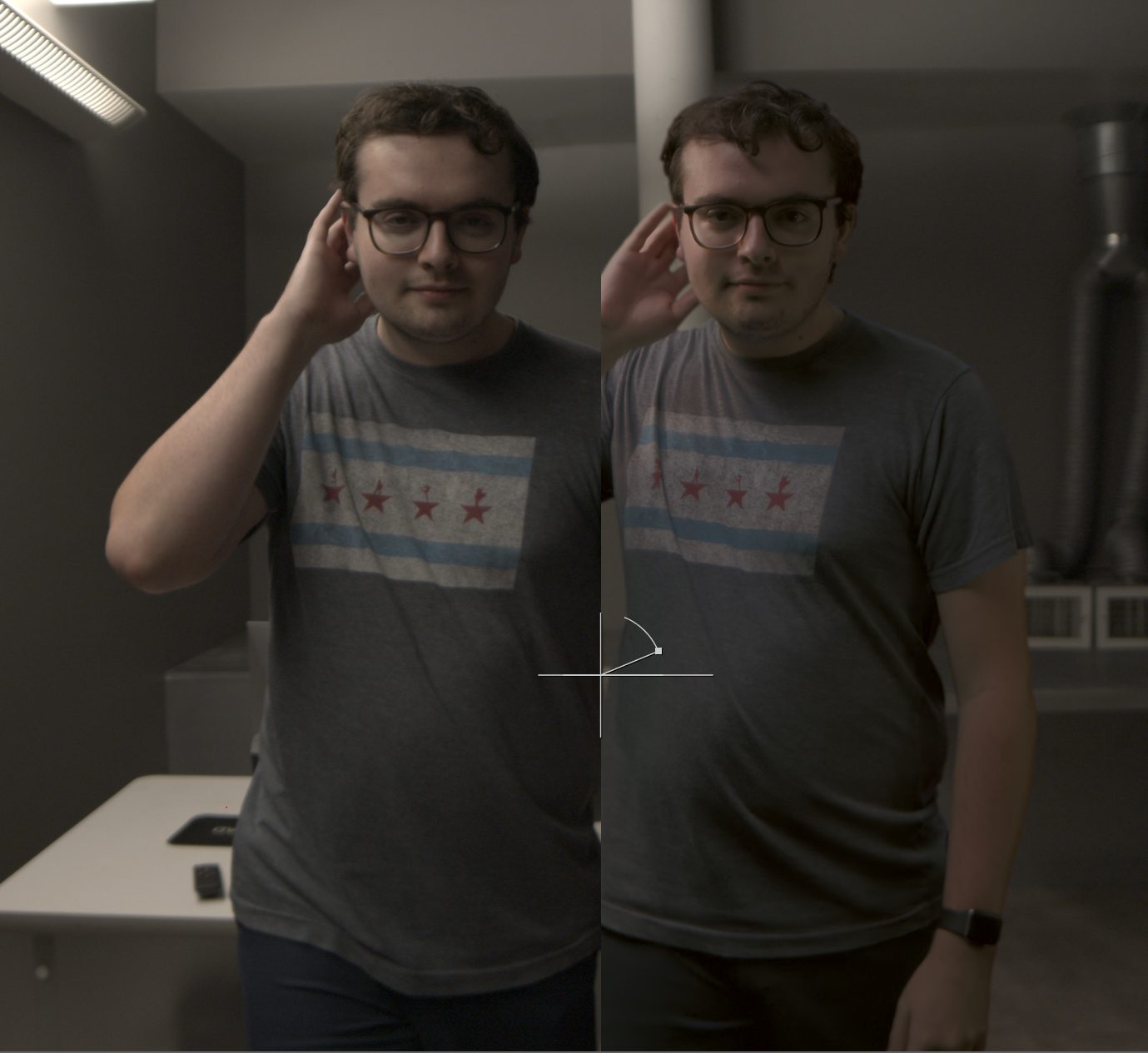
For this actor replacement assignment, I have a better understanding of what works for our setup. I chose this indoor scene from the movie Oppenheimer. The main lighting source is the window light, with a moderate amount of bounce light coming from the wall, and possibly an additional rim light that lights the silhouette of the face.
What I learned in this assignment is that some lighting setups are optimized for specific actors — their facial structure could be best presented under certain lighting, and the same setup might not work for someone else. Costumes matter too: the various textures and materials of a costume alter how light reacts to it, which in turn changes how the scene and the character look.
Acting
In this class, we were encouraged to work with different people and act in one another's films. I was the actor in a few projects, and I got to observe how other classmates approached the same prompt we were given. Here are some of the goofy moments I had on set — including a forced perspective scene by my classmate Christopher Perez, with me acting in it.