Game Art: Engine Pipeline and Practice
Course Name: Game Art: Engine Pipeline and Practice
Instructor: Kane Garret
Quarter: Winter 26
Keywords: Unreal Engin 5, Environment Art,
Blueprints, Cinematics
Date Updated: March 23, 2026
In my Game Art: Engine Pipeline and Practices (GAME 710) class with Professor Kane Garrett, we are shifting focus from offline rendering to the immediacy of the real-time render pipeline. This course isn't just about making things look good; it is about mastering the "step-by-step process of game engine production". Working inside Unreal Engine 5 , the goal is to bridge the gap between artistic vision and technical implementation, learning to manage industry-standard pipelines while handling everything from environmental storytelling to packaging final executables. It is a rigorous exercise in becoming a "creative athlete"—balancing high-fidelity aesthetics with the strict performance requirements of a real-time engine.
Project 1: Set Dressing
For the first assignment, "Set Dressing", I utilized the BigMediumSmall Grand Bazaar Asset Pack and Quixel Megascans to construct a night-time environment that balances atmosphere with readability. The challenge was not modeling from scratch, but rather utilizing existing art assets to curate a cohesive world. I focused heavily on lighting composition, using Ultra Dynamic Sky and EasyFog to create a mood where the cool, blue ambient moonlight contrasts sharply with the warm, inviting orange glow of the lantern fire. As noted in my change log, I had to refine the lighting temperature specifically to prevent the scene from feeling too "cool" and intense, ensuring the volumetric fog integrated naturally with the foliage and water lilies.
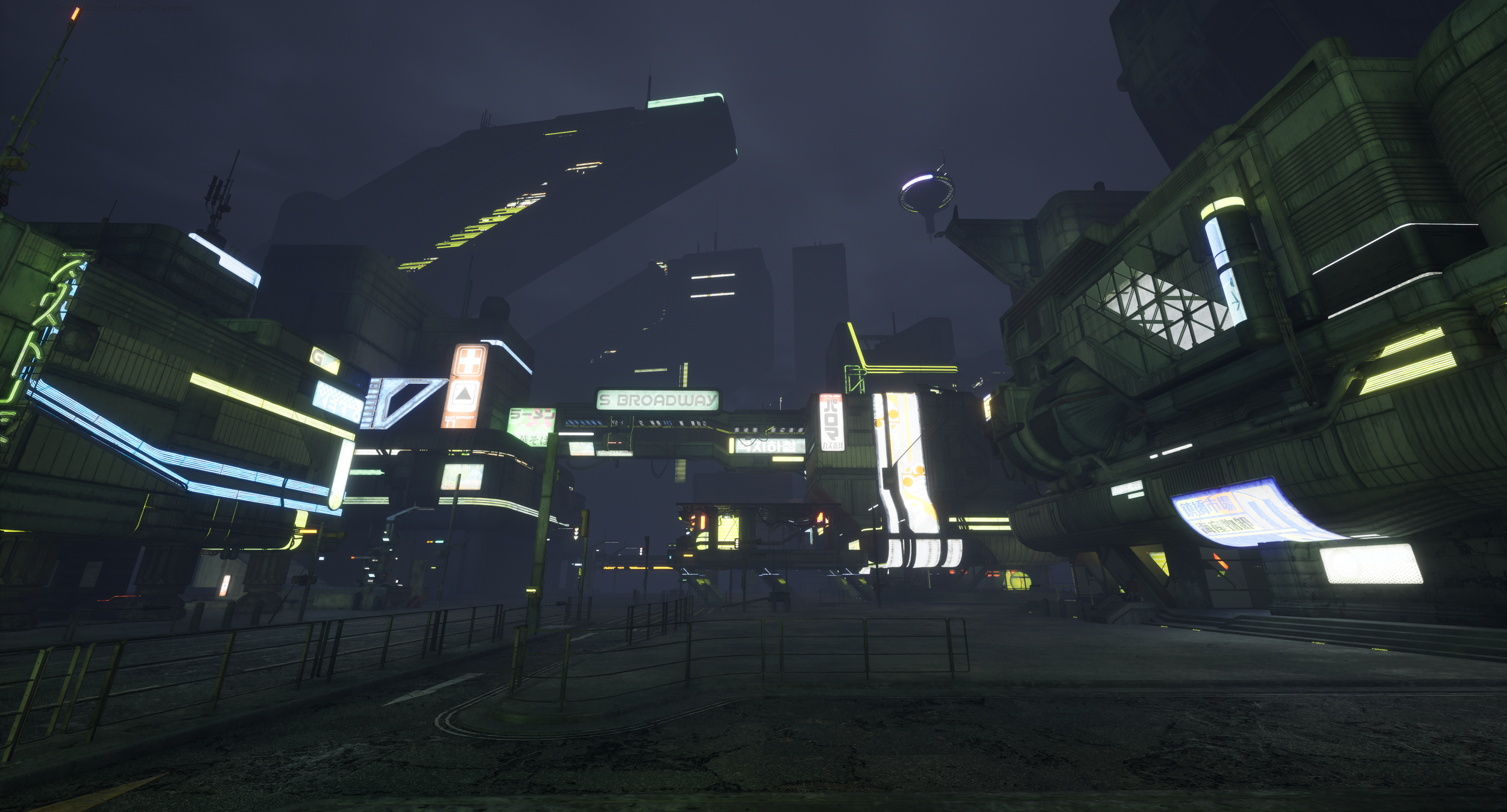
This scene was going to be my project, but it didn’t meet the project requirement of using the Unreal Sensi Template. So this was abandoned. But it was good practice.
The above video is my Project 1 demo video.
Project 2: INteractive Mouse GamE
For Assignment 2, the focus shifted from static environments to event-driven scripting, where I tasked myself with creating a fully interactive "cabinet of curiosities." Using Unreal’s Blueprint system, I programmed a series of distinct interactions that trigger based on specific player inputs—ranging from physics-based impulses to random integer logic. Key technical implementations included a "Sorting Hat" that utilizes randomization nodes to cycle through different voice lines, a physics-enabled alien toy that reacts dynamically to being clicked, and a media texture integration that brings a static painting to life. I also focused on subtle user feedback loops, such as implementing OnBeginCursorOver events to trigger steam particles on the tea kettle, ensuring the environment feels responsive to the cursor even before a direct interaction occurs.
Project 4&5: Epic Door Game Cinematics
The goal of these project is to model, texure, and animate an epic door asset and to create a game transition cinematic.
I model the door using maya, textured it with Substance Painter, animated in Unreal engine. All camera works and lighting is done in Unreal as well.